
Business Continuity Planning: Definition, Key Components, and How to Develop One
- Peak Frameworks Team

- Apr 7
- 4 min read
If you're interested in breaking into finance, check out our Private Equity Course and Investment Banking Course, which help thousands of candidates land top jobs every year.
What is Business Continuity Planning?

Business Continuity Planning (BCP) refers to the process by which an organization prepares for potential disruptions to its operations. A BCP ensures that essential functions can continue during and after a crisis. The primary objective is to minimize downtime, protect the organization’s assets, and maintain the ability to serve customers despite adverse conditions.
BCP differs from disaster recovery (DR), which focuses on restoring IT systems after a disruption. While DR is part of a BCP, the latter takes a broader approach, encompassing every aspect of business operations.
Why is Business Continuity Planning Important?
The significance of a BCP lies in its ability to help organizations:
Reduce Downtime: Quick recovery from disruptions means fewer losses in productivity and revenue.
Safeguard Reputation: Consistently delivering services in the face of adversity enhances customer confidence and loyalty.
Ensure Legal Compliance: Many industries have regulations that require businesses to have a continuity plan.
Protect Employees and Stakeholders: A BCP can guide decision-making and ensure the safety of employees, customers, and partners.
Without a continuity plan, organizations risk prolonged operational disruptions, financial losses, and damage to their reputations.
Key Components of a Business Continuity Plan
A well-developed Business Continuity Plan should include several essential elements. Each component serves a specific purpose in helping businesses prepare, respond, and recover from disruptions.
1. Risk Assessment and Business Impact Analysis
The first step in creating a BCP is identifying potential threats to the business. These threats can range from natural disasters (e.g., earthquakes, floods) to cyberattacks, power outages, or supply chain disruptions.
Once risks are identified, a BIA is conducted to evaluate how these risks could affect business operations. The BIA helps determine the critical functions of a business and how long the organization can survive without them. Key questions answered in a BIA include:
Which functions are vital for the organization’s survival?
What is the maximum acceptable downtime for each function?
What are the potential financial and operational impacts of a disruption?
2. Recovery Strategies
Based on the risk assessment and BIA, organizations must develop recovery strategies that prioritize the restoration of critical functions. Common strategies include:
Alternative Worksites: If a physical office becomes inaccessible, organizations should have remote working options or backup locations.
Cloud-Based Systems: Moving data and operations to cloud environments ensures that essential information is accessible from any location.
Backup Power and Resources: Ensure that key operations can continue, even in the event of a power outage or other infrastructure failure.
3. Crisis Communication Plan
Effective communication is crucial during a crisis. A Crisis Communication Plan outlines how the organization will communicate with internal and external stakeholders during a disruption. Key components of this plan include:
Designated Spokespersons: Identify individuals responsible for delivering information to employees, clients, and the media.
Communication Channels: Specify the tools (email, phone, social media) used to disseminate updates.
Messaging Templates: Pre-approve templates for common types of messages to ensure consistent and accurate communication.
4. Roles and Responsibilities
In any crisis, clarity of roles is essential. A BCP should define the roles and responsibilities of key personnel, including who is in charge of implementing the plan, managing recovery efforts, and communicating with stakeholders. An organized chain of command ensures that everyone understands their role, reducing confusion during a disruption.
5. Testing and Training
A Business Continuity Plan is only effective if employees know how to implement it. Regular testing and training are crucial for ensuring that all staff members understand the plan and can execute their responsibilities during an emergency. Common methods for testing include:
Tabletop Exercises: Simulated scenarios where staff walk through the steps of the BCP in a low-pressure environment.
Full-Scale Drills: A more comprehensive test that simulates a real-life crisis, requiring employees to act in real time.
Post-Exercise Reviews: After each test, the plan should be reviewed and updated based on feedback and identified weaknesses.
6. Continuous Improvement and Maintenance
Business environments are constantly evolving, so a BCP must be a living document that is updated regularly. This ensures the plan stays relevant and aligned with the organization’s changing risks, priorities, and infrastructure. Regular reviews, especially after any significant organizational change, are essential.
Steps to Develop a Business Continuity Plan
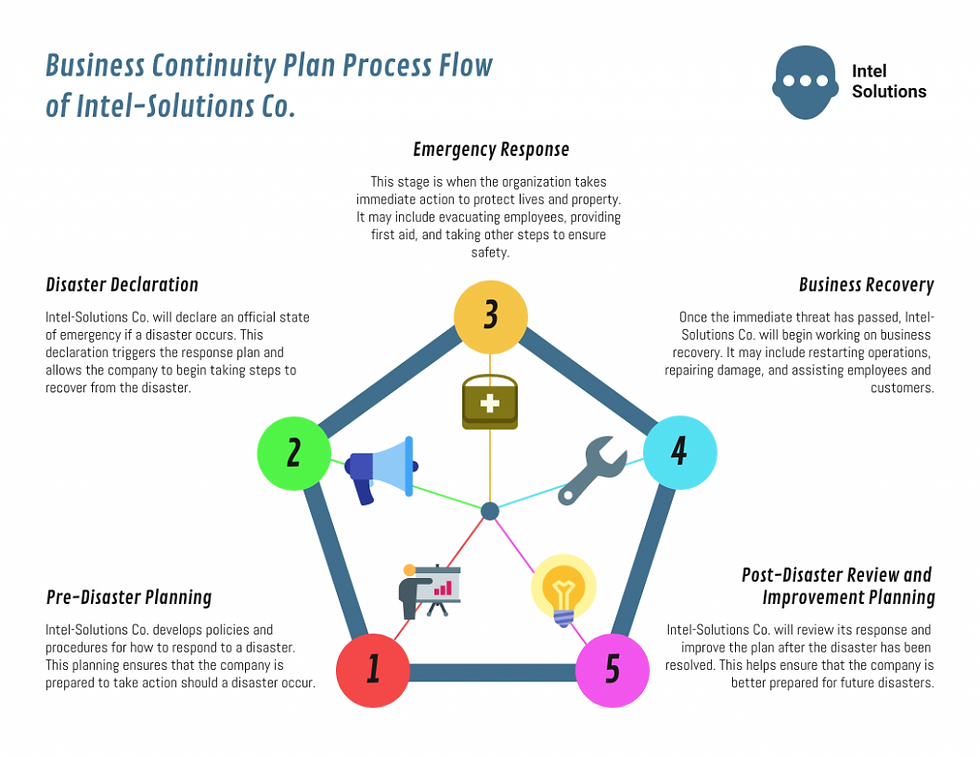
Developing a comprehensive BCP can seem daunting, but following a structured approach will ensure nothing is overlooked. Here’s a step-by-step guide to building your own BCP:
1. Assemble a Business Continuity Team
The first step is to appoint a team responsible for overseeing the continuity planning process. This team should include representatives from various departments (e.g., IT, HR, Operations) to ensure all aspects of the business are covered.
2. Conduct a Risk Assessment and Business Impact Analysis
Identify potential threats to your business and evaluate how they might impact operations. Use the results of the risk assessment and BIA to prioritize which business functions need to be restored first in the event of a disruption.
3. Develop Recovery Strategies
For each critical function identified in your BIA, create detailed recovery strategies. Ensure you have plans for accessing alternate locations, managing IT recovery, and maintaining critical communications.
4. Create a Crisis Communication Plan
Define how you will communicate with employees, customers, and stakeholders during a crisis. Ensure all contact information is current and communication channels are well established.
5. Define Roles and Responsibilities
Clearly outline the roles of all team members and decision-makers. Identify who will be responsible for coordinating the recovery efforts and managing communications.
6. Test the Plan
Once your BCP is complete, run tests to ensure its effectiveness. Involve key personnel in simulated scenarios to help them familiarize themselves with the plan’s details.
7. Update and Improve the Plan
After each test or actual incident, gather feedback and review the performance of the BCP. Continuously update the plan as your business evolves and new risks emerge.
Conclusion
Business Continuity Planning is an essential process that enables organizations to remain operational during disruptions. By preparing for potential threats and regularly testing their response strategies, businesses can minimize losses, protect stakeholders, and ensure long-term success. Establishing a BCP is not a one-time task; it’s an ongoing commitment that requires regular updates and a proactive mindset.
Investing in a well-structured Business Continuity Plan today will provide peace of mind and the tools needed to weather future challenges.


