
Stock Screener: Definition, How it Works, and Why You Should Use One

If you're interested in breaking into finance, check out our Private Equity Course and Investment Banking Course, which help thousands of candidates land top jobs every year.
What is a Stock Screener?

Investing in the stock market can be challenging without the right tools and information. Whether you are a seasoned professional or a new investor, a stock screener is one of the most powerful tools to aid your investment decisions.
A stock screener is a tool that allows investors to filter through thousands of publicly traded companies based on specific criteria. It helps narrow down investment options by using various filters such as:
Market Capitalization
Industry or Sector
Price-to-Earnings Ratio (P/E)
Financial Metrics (e.g., revenue, net income)
Stock screeners can save a significant amount of time and help you identify stocks that meet your investment strategy and objectives.
How Stock Screeners Work
Stock screeners work by aggregating and analyzing financial data for a vast number of stocks. When an investor enters specific criteria or filters, the screener sorts through its database to provide a list of stocks that match those filters.
Components of a Stock Screener
Most stock screeners include three primary components:
Filter Options: Investors can choose filters like price, P/E ratio, or market cap to identify stocks based on their criteria.
Database: A large database of publicly traded companies and their financial data.
Results Display: A list or table that shows all stocks meeting the selected criteria, often with additional data points like stock performance and valuation metrics.
Why Use a Stock Screener?
Stock screeners are essential tools for investors and finance professionals because they:
Save Time: Manually sifting through thousands of stocks would be time-consuming. A stock screener can complete this task in seconds.
Enhance Decision-Making: By providing data-driven results, stock screeners help investors make more informed investment decisions.
Enable Strategy Implementation: Whether you are a value investor looking for undervalued stocks or a growth investor seeking high-growth companies, a stock screener can filter out stocks that don’t fit your strategy.
Key Features of a Stock Screener
Stock screeners offer various features that can significantly enhance the investment research process. Some of the key features include:
1. Filter and Criteria Options
Stock screeners allow users to apply multiple filters to refine their search. Common criteria include:
Valuation Metrics: P/E ratio, Price-to-Book (P/B) ratio, Price-to-Sales (P/S) ratio.
Performance Metrics: Revenue growth, earnings growth, dividend yield.
Financial Health: Debt-to-equity ratio, cash flow, profitability ratios.
2. Preset and Custom Screeners
Many screeners offer pre-configured filters for common investment strategies like growth, value, and income. Users can also create custom screeners by setting their own criteria.
3. Real-Time Data
Advanced stock screeners provide real-time data updates, ensuring that users are making decisions based on the latest available information.
4. Technical and Fundamental Analysis
Stock screeners often include both technical indicators (e.g., moving averages, RSI) and fundamental metrics (e.g., financial ratios) to offer a comprehensive analysis.
5. Export and Alert Features
Some stock screeners allow users to export their findings or set up alerts for specific criteria, helping them stay updated on potential investment opportunities.
How to Use a Stock Screener Effectively
Using a stock screener effectively requires an understanding of what criteria to set based on your investment strategy. Here are steps to get started:
Step 1: Define Your Investment Strategy
Before using a stock screener, clearly define your investment strategy. Are you looking for value stocks with low P/E ratios? Or are you interested in high-growth technology companies? Your strategy will guide the filters you choose.
Step 2: Choose Relevant Filters
Select filters that align with your strategy. For example, if you are a value investor, you might choose filters like:
P/E Ratio: Less than 15
Dividend Yield: Greater than 2%
Debt-to-Equity Ratio: Less than 0.5
Step 3: Analyze the Results
Review the list of stocks that match your criteria. Pay attention to key financial ratios and performance metrics to narrow down your options further.
Step 4: Monitor and Refine
Investment criteria may change based on market conditions or changes in your strategy. Regularly refine your filters and monitor the results to ensure you are identifying the best opportunities.
Types of Stock Screeners
There are different types of stock screeners available, each catering to specific needs:
1. Fundamental Stock Screeners
Focus on fundamental analysis criteria like revenue growth, profitability, and financial health. Ideal for long-term investors and value seekers.
2. Technical Stock Screeners
Use technical indicators like moving averages, RSI, and volume patterns. These are best suited for short-term traders looking for entry and exit points.
3. Real-Time Stock Screeners
Offer live updates and real-time data. Essential for day traders and active investors who need up-to-date information.
4. Customizable Stock Screeners
Allow users to create highly specific screeners tailored to their investment strategy, combining both fundamental and technical metrics.
Popular Stock Screeners
There are numerous stock screeners available, ranging from free tools to advanced paid platforms. Some of the most popular include:
Yahoo Finance Stock Screener: A user-friendly tool offering basic filters for free.
Finviz: Provides a wide range of filters and visualizations. Offers a free and paid version.
Morningstar Stock Screener: Known for its detailed fundamental analysis and ratings.
Bloomberg Terminal: A professional-grade tool with extensive data and real-time analytics, but at a high cost.
TradingView: Combines technical analysis tools with a robust screener for active traders.
Advantages and Limitations of Stock Screeners
Advantages
Efficiency: Quickly filter through thousands of stocks.
Accuracy: Use data-driven criteria for objective analysis.
Customization: Tailor your filters based on your unique investment strategy.
Limitations
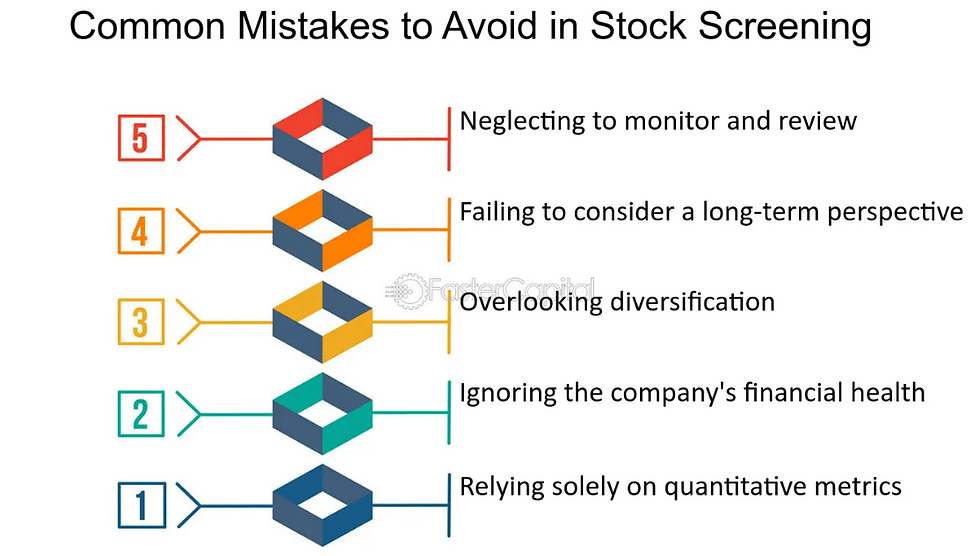
Over-Reliance on Data: Screeners rely heavily on historical data and may not account for qualitative factors like management quality or market sentiment.
Incomplete Information: Not all screeners provide access to every data point, especially in free versions.
Market Timing: Stock screeners do not predict future market movements; they simply provide data for informed decision-making.
Final Thoughts
A stock screener is an indispensable tool for both novice and experienced investors. By leveraging its filtering capabilities, you can narrow down investment options that align with your strategy and goals. Remember to use stock screeners as a starting point, and always conduct further research and analysis before making any investment decisions.
Whether you are a value investor looking for undervalued opportunities or a trader seeking momentum plays, a well-configured stock screener can significantly enhance your investment research and decision-making process.


