
Racketeering: Definition, Types, and Legal Implications

If you're interested in breaking into finance, check out our Private Equity Course and Investment Banking Course, which help thousands of candidates land top jobs every year.
What is Racketeering?
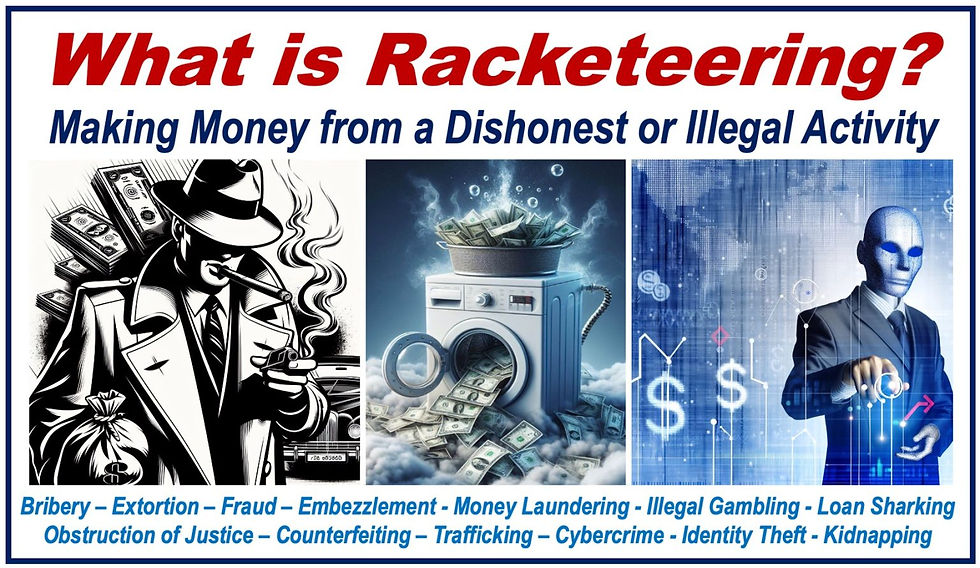
Racketeering generally refers to illegal business dealings or organized schemes that involve extortion, fraud, bribery, or other activities to generate revenue. It typically involves a group or organization that continuously engages in criminal acts to further their illegal activities and profits.
Key Characteristics of Racketeering
Racketeering schemes often have the following characteristics:
Continuous Criminal Activity: It involves a pattern of illegal actions, not a one-time event.
Organized Groups or Enterprises: Racketeering is usually carried out by groups with structured operations, such as organized crime families, gangs, or corrupt organizations.
Intent to Profit: The primary goal is to gain financial or material benefits through unlawful means.
The History and Evolution of Racketeering
The concept of racketeering became prominent in the early 20th century when criminal enterprises like the Mafia began to expand their operations in the United States. The term "racketeering" was originally associated with illegal labor unions and protection rackets, where criminals would coerce businesses or individuals into paying for protection to avoid harm.
The legal framework for combating racketeering was significantly strengthened in 1970 with the enactment of the Racketeer Influenced and Corrupt Organizations Act (RICO) in the U.S. This law was designed to combat organized crime and allowed prosecutors to target entire organizations rather than just individual members.
Types of Racketeering
Racketeering covers a broad spectrum of illegal activities, often carried out by organized groups. Some of the most common types include:
1. Protection Racketeering
In protection racketeering, criminals offer "protection" to businesses or individuals in exchange for money. If the victim refuses to pay, they may face threats, violence, or property damage. This type of racketeering is common in areas with limited law enforcement or high levels of organized crime.
2. Labor Racketeering
Labor racketeering involves the manipulation or control of labor unions to influence business operations. It often includes extortion, bribery, and embezzlement of union funds. Labor racketeering schemes can lead to higher costs for businesses and unfair labor practices.
3. Bribery and Corruption

In bribery and corruption, individuals or groups use bribery to influence public officials or corporate leaders to make decisions that favor the racketeers. It can occur in various sectors, including politics, construction, and law enforcement.
4. Loan Sharking
Loan sharking involves offering loans at extremely high interest rates, often with threats of violence if the borrower cannot repay. It is a predatory practice that targets individuals or businesses in financial distress.
5. Drug Trafficking and Smuggling
Drug trafficking is a significant source of revenue for organized crime groups. It involves the illegal production, distribution, and sale of drugs. Smuggling, on the other hand, can involve various goods, such as weapons, counterfeit products, or even people.
6. Money Laundering
Money laundering is the process of concealing the origins of illegally obtained money, often by means of transfers through foreign banks or legitimate businesses. It is an essential element in many racketeering schemes, as it allows criminals to use their illicit profits without attracting suspicion.
Legal Framework for Combating Racketeering
The U.S. government and many other countries have established legal frameworks to combat racketeering. The most notable among these is the Racketeer Influenced and Corrupt Organizations Act (RICO).
Racketeer Influenced and Corrupt Organizations Act (RICO)
RICO is a federal law in the United States enacted in 1970 to combat organized crime. It provides powerful tools for prosecutors to target not only individual criminals but entire organizations. The law defines racketeering activity as any act or threat involving certain state or federal offenses, including:
Bribery
Extortion
Fraud
Gambling
Murder
RICO allows for both criminal and civil penalties. Defendants found guilty under RICO can face severe consequences, including:
Criminal Penalties: Fines, imprisonment, and forfeiture of assets.
Civil Penalties: Victims can sue for triple damages, leading to substantial financial liabilities for the guilty parties.
International Laws Against Racketeering
Outside of the United States, various international conventions and national laws target racketeering and organized crime. For example, the United Nations Convention against Transnational Organized Crime (UNTOC) provides a global framework for cooperation among countries to combat criminal organizations.
Impact of Racketeering on Businesses and Society
Racketeering has far-reaching effects on businesses, governments, and society. Its impacts include:
Economic Disruption: Racketeering activities like extortion, fraud, and embezzlement can lead to financial losses for businesses and consumers.
Corruption of Public Institutions: When public officials are involved in or influenced by racketeering, it undermines trust in government and the rule of law.
Increased Costs for Businesses: Labor racketeering and bribery can lead to higher costs for businesses, which may be passed on to consumers.
How to Prevent and Combat Racketeering
Preventing and combating racketeering requires a multifaceted approach that includes:
Strengthening Legal Frameworks: Governments must establish and enforce laws that provide severe penalties for racketeering activities.
Enhanced Law Enforcement Training: Law enforcement agencies should be equipped and trained to handle complex racketeering cases, including financial crimes.
Public Awareness and Reporting: Educating the public about the signs of racketeering and encouraging them to report suspicious activities can help reduce the prevalence of these crimes.
International Cooperation: Since many racketeering schemes cross borders, international cooperation is vital to disrupt and dismantle criminal organizations.
Final Thoughts
Racketeering remains a significant challenge for law enforcement and legal systems around the world. While laws like RICO have made it easier to prosecute criminal organizations, racketeering continues to evolve, with criminals finding new ways to exploit weaknesses in the system.
Understanding the types, legal implications, and impact of racketeering is crucial for businesses, governments, and society to safeguard against this form of organized crime.


