
Quitclaim Deed: Definition, Common Uses, Pros and Cons

If you're interested in breaking into finance, check out our Private Equity Course and Investment Banking Course, which help thousands of candidates land top jobs every year.
What is a Quitclaim Deed?

A quitclaim deed transfers whatever interest or ownership the grantor (the person transferring the property) has in the property to the grantee (the recipient). Unlike a warranty deed, which guarantees a clear title and offers protection against future claims, a quitclaim deed simply releases the grantor’s interest in the property without any promises or assurances.
Key Characteristics of a Quitclaim Deed:
No warranties: The grantor does not guarantee that they have valid ownership or that the property is free of liens or encumbrances.
Quick and simple transfer: It is a fast way to transfer property, often used in family transactions or between people who trust each other.
Limited protection: The grantee takes the property “as-is,” without any assurance that there are no defects in the title.
Common Uses of Quitclaim Deeds
While quitclaim deeds are not typically used in standard real estate transactions, they are common in specific situations where a formal title search and warranty are less important. Below are some of the most common uses:
1. Transferring Property Between Family Members
Quitclaim deeds are often used to transfer property between relatives, such as when a parent transfers ownership to a child. Since the parties typically trust one another, the lack of title guarantees is not usually a concern.
2. Adding or Removing a Spouse from a Title
In cases of marriage or divorce, a quitclaim deed is frequently used to add a spouse’s name to the property title or remove it. This is common when one spouse wishes to give up their interest in a jointly owned property after a divorce settlement.
3. Correcting Title Defects
A quitclaim deed may be used to correct minor errors in a property’s title, such as a misspelled name or incorrect legal description. This allows for a fast correction without the need for extensive legal processes.
4. Transferring Property to a Trust
People who are establishing a trust may use a quitclaim deed to transfer ownership of real estate into the trust. This helps manage the property more efficiently and ensure it is distributed according to the trust’s terms after the owner’s death.
Advantages of Using a Quitclaim Deed
A quitclaim deed can offer several advantages, especially when parties are familiar with one another or when title guarantees are unnecessary.
1. Speed of Transfer
Quitclaim deeds are faster to process than other types of deeds, as they require less paperwork and legal formalities. This makes them ideal for straightforward transfers, such as between family members.
2. Simplicity
Since quitclaim deeds don’t involve title insurance or title searches, they are relatively simple to execute. This simplicity can save both time and money for the grantor and the grantee.
3. Cost-Effective
In many cases, quitclaim deeds are less expensive than other types of deeds, as there is no need for title searches, title insurance, or legal assurances. This makes them a cost-effective option for transferring property in less formal situations.
Disadvantages and Risks of Quitclaim Deeds
While quitclaim deeds can be useful in certain circumstances, they also come with significant risks, especially for the grantee. Understanding these risks is essential before using a quitclaim deed.
1. No Guarantee of Clear Title
The most significant risk of using a quitclaim deed is that it provides no guarantee that the title is clear. If the property has any outstanding liens, encumbrances, or claims, the grantee is responsible for resolving them, even if they were unaware of these issues at the time of the transfer.
2. Limited Legal Protection
Because a quitclaim deed offers no warranties, the grantee has little legal recourse if problems with the title arise after the transfer. This is why quitclaim deeds are rarely used in formal real estate sales between unrelated parties.
3. Potential for Fraud or Misrepresentation
In cases where the grantor’s ownership of the property is questionable, a quitclaim deed could be used fraudulently to transfer property without the rightful owner’s consent. This risk is particularly high when parties do not fully trust each other or when the grantee does not conduct due diligence.
Quitclaim Deed vs. Warranty Deed
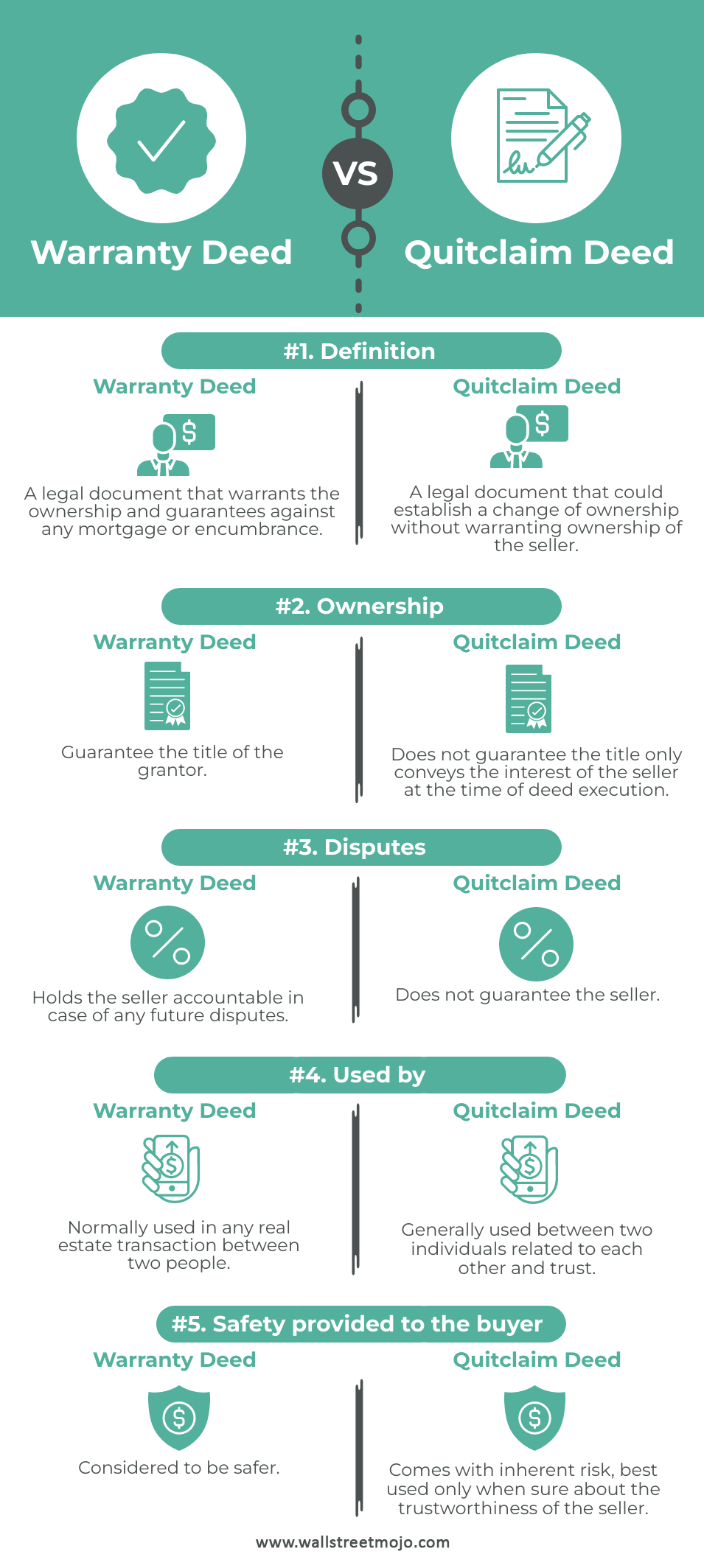
It’s essential to understand how a quitclaim deed differs from a warranty deed, which is more commonly used in standard real estate transactions. A warranty deed guarantees that the property has a clear title and that the grantor has the legal right to transfer ownership. It also ensures that there are no undisclosed liens, claims, or encumbrances.
Major Differences:
Title guarantees: Warranty deeds provide assurances about the property’s title, while quitclaim deeds do not.
Legal protection: The grantee in a warranty deed has legal recourse if issues with the title arise, unlike with a quitclaim deed.
Usage: Warranty deeds are used in formal sales, while quitclaim deeds are used in informal transactions, such as between family members.
How to Execute a Quitclaim Deed
Although quitclaim deeds are simple, there are still specific steps required to ensure the transfer is legally valid. Here’s a brief guide on how to execute a quitclaim deed:
1. Prepare the Deed
The grantor must fill out the quitclaim deed form, which includes essential details such as:
Names of the grantor and grantee
Legal description of the property
The date of transfer
2. Notarize the Deed
The deed must be signed by the grantor in front of a notary public to ensure its legality. Some states also require the grantee’s signature, but this varies by jurisdiction.
3. File the Deed
The signed and notarized quitclaim deed must be filed with the local county recorder’s office to be officially recorded. This ensures that the transfer is part of the public record.
4. Pay Any Applicable Fees
There may be filing fees or transfer taxes associated with the quitclaim deed, which vary by location. These must be paid at the time of filing.
When Should You Avoid a Quitclaim Deed?
While quitclaim deeds have their uses, they are not appropriate in every situation. If you are purchasing a property from a seller you do not know or if you are concerned about potential title issues, it’s best to use a warranty deed instead. A quitclaim deed offers no protection if there are claims, liens, or other problems with the title.
Conclusion
A quitclaim deed is a simple and quick way to transfer property, particularly between people who trust one another. However, it comes with significant risks due to the lack of title guarantees. Understanding when a quitclaim deed is appropriate and the risks involved is essential to making informed decisions in real estate transactions. For formal sales or cases where title issues may arise, a warranty deed is often a safer option.


