
Disposable Income: Definition and its Economic Role

If you're interested in breaking into finance, check out our Private Equity Course and Investment Banking Course, which help thousands of candidates land top jobs every year.
The Basics of Disposable Income

Disposable income is what remains from your gross income after the government takes its share in taxes. This remainder is your true spending power—what you can use to cover both necessities and luxuries and what can be tucked away for future needs.
It offers a clear snapshot of your financial health, significantly more so than gross income, as it represents the actual resources at your disposal.
Distinguishing Between Disposable and Discretionary Income
While disposable income covers the spectrum of potential spending and saving, discretionary income narrows this down to what can be spent on non-essentials after essential expenses (like housing, food, and healthcare) are covered.
Understanding this distinction is crucial for effective budgeting and financial planning, enabling more strategic decisions regarding savings and expenditure.
The Role of Disposable Income in Personal Finance
Disposable income is the linchpin of financial well-being, guiding budgeting decisions, savings opportunities, and overall financial strategy.
Budgeting: Effective budgeting hinges on understanding your disposable income to allocate funds smartly across needs, wants, and savings.
Tax Planning: Strategic tax planning can substantially increase disposable income by leveraging tax deductions and credits.
Savings vs. Spending: Achieving a balance between saving for future financial goals and spending for present satisfaction is a delicate art that revolves around disposable income management.
Calculating Disposable Income
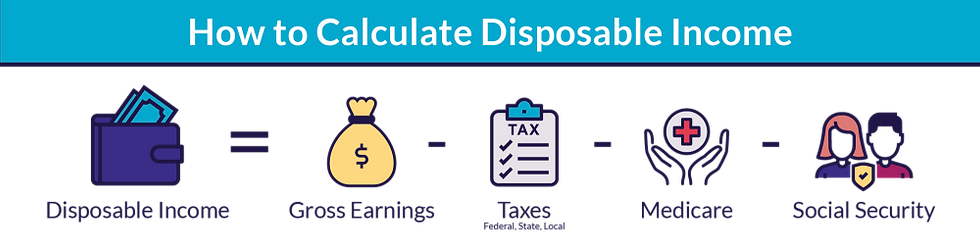
The process for determining disposable income is straightforward yet revealing:
Identify your gross income, which includes all earnings before taxes.
Subtract all forms of taxes (federal, state, and possibly local).
The result is your disposable income.
This calculation not only sheds light on the impact of taxation on personal finances but also emphasizes the importance of savvy tax planning to enhance disposable income.
Disposable Income and the Economy
Disposable income directly influences economic health by dictating the spending power of consumers. High levels of disposable income typically lead to increased consumer spending, which fuels economic growth.
Conversely, reductions in disposable income can lead to decreased consumer spending, potentially signaling or exacerbating economic downturns.
Tracking disposable income trends provides invaluable insights into the health of the economy and consumer confidence. For instance, persistent growth in disposable income suggests robust economic health, while stagnation or decline may indicate underlying economic challenges.
Enhancing Your Disposable Income
Professionals aiming to boost their disposable income can pursue various paths, including career progression, financial education, and smart investment strategies.
Career Advancement: Climbing the career ladder or transitioning to higher-paying roles can significantly boost disposable income.
Investment: Wise investments can grow disposable income over time, contributing to wealth accumulation and financial security.
Lifestyle Adjustments: Simple lifestyle changes can free up more money, enhancing disposable income and allowing for greater financial flexibility.
Navigating Challenges to Disposable Income
While managing disposable income might seem straightforward, various challenges like high living expenses and debt can impede financial freedom. Overcoming these challenges requires strategic planning and disciplined budgeting.
Budgeting and Expense Management: Regularly tracking expenses can unveil potential savings, increasing disposable income.
Debt Strategy: Employing methods such as debt consolidation can reduce monthly payments, thereby increasing available disposable income.
Tax-Advantaged Savings: Utilizing tax-advantaged accounts like 401(k)s or HSAs can reduce taxable income, effectively increasing disposable income.
The Future of Disposable Income
The future landscape of disposable income is inherently uncertain, influenced by economic shifts, policy changes, and labor market trends. Adapting to these changes through continuous learning and financial flexibility is essential for maximizing disposable income.
Expanding Our Understanding
Beyond these strategies, it’s vital to foster an environment of continuous financial education. Keeping abreast of economic conditions, tax law changes, and new financial products can uncover additional opportunities to enhance disposable income.
Furthermore, understanding the psychological aspects of spending and saving can lead to more informed and disciplined financial decisions. For instance, the concept of "mental accounting," where people categorize funds differently (even though money is fungible), can impact how disposable income is perceived and used. Recognizing and adjusting these mental biases can lead to better financial outcomes.
Engaging with a financial advisor can also provide tailored strategies to optimize disposable income based on individual circumstances and goals. These professionals can offer insights into complex financial planning areas, such as investments, insurance, and estate planning, which play critical roles in maximizing and protecting disposable income.
Conclusion
Understanding and effectively managing disposable income is fundamental to achieving personal financial goals and contributing to overall economic prosperity. By calculating, maximizing, and strategically utilizing disposable income, individuals can enhance their financial well-being and navigate the complexities of the economic landscape with confidence.
As we move forward, let us prioritize our financial education and planning, viewing disposable income not just as a measure of what we can spend today, but as a tool for building a more secure and prosperous future.


