
Direct Tax: Definition, Types, and Importance
- Peak Frameworks Team

- Apr 6
- 4 min read
If you're interested in breaking into finance, check out our Private Equity Course and Investment Banking Course, which help thousands of candidates land top jobs every year.
What is Direct Tax?
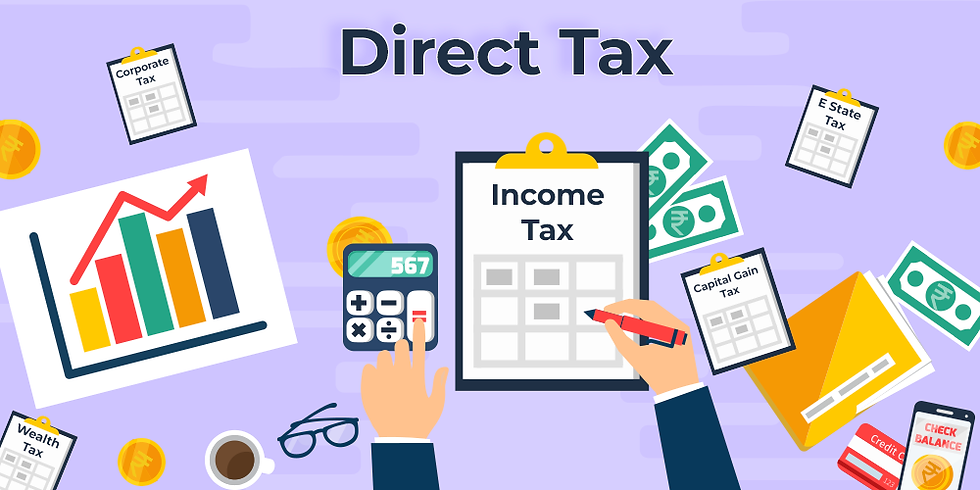
A direct tax is a type of tax that is levied directly on individuals or organizations by the government. It is paid directly to the government by the person or entity that is obligated to do so, without the involvement of intermediaries.
Direct taxes are a fundamental part of any country's tax system and play a crucial role in funding government activities, providing public goods, and ensuring wealth distribution.
Unlike indirect taxes, where the burden of tax can be passed on to others, direct taxes are non-transferable, meaning the entity responsible for the tax must pay it directly.
Key Characteristics of Direct Tax:
Paid directly by the individual or organization to the government
Non-transferable, meaning the burden cannot be shifted to others
Based on the ability to pay (progressive nature in many cases)
Types of Direct Taxes
Direct taxes come in several forms, each of which applies to different aspects of personal or corporate finance. Each of these direct taxes is typically calculated based on income, assets, or profits.
Let’s break down the most common types.
1. Income Tax
Income tax is the most well-known form of direct tax, levied on the earnings of individuals or businesses. Governments use income taxes to fund public services such as education, healthcare, infrastructure, and defense.
Personal income tax applies to an individual's earnings from various sources, such as salaries, investments, and rental income.
Corporate income tax applies to the profits of corporations, calculated after deducting expenses, depreciation, and other qualifying deductions.
2. Capital Gains Tax
Capital gains tax is imposed on the profit made from the sale of assets, including stocks, real estate, and other investments. This tax is only applied when the asset is sold and the gain is realized.
Short-term capital gains: Profits from assets held for less than a year, usually taxed at a higher rate.
Long-term capital gains: Profits from assets held for over a year, typically taxed at a lower rate due to their long-term nature.
3. Property Tax
Property tax is a tax on the ownership of real estate, based on the value of the property. Property taxes are typically used by local governments to fund municipal services, including schools, road maintenance, and emergency services.
Property taxes vary depending on the location and the assessed value of the real estate.
4. Estate Tax
Estate tax is levied on the total value of an individual’s assets at the time of their death before those assets are transferred to heirs. It applies to large estates that exceed a certain threshold, which varies by country.
Inheritance tax, a related tax, may apply to beneficiaries receiving the estate in some jurisdictions.
5. Corporate Tax
Corporate tax is imposed on the net income or profit of corporations. The tax rate varies across countries and industries, with deductions allowed for operating expenses, capital expenditures, and other business costs.
Corporate taxes are significant sources of revenue for governments and influence decisions on business locations, investments, and structures.
Importance of Direct Taxes
Direct taxes play a crucial role in the economic stability and development of a country. Here’s why they matter:
1. Revenue for Government
Direct taxes are one of the primary sources of revenue for governments. The funds collected are used to provide public services, such as:
Education
Healthcare
Public transportation
Infrastructure development
Without this steady stream of revenue, the government would struggle to finance these essential services, directly impacting the economy and citizens' quality of life.
2. Wealth Redistribution
Direct taxes, especially income taxes, serve as tools for redistributing wealth. A progressive tax system—where higher-income individuals or businesses pay a larger share—helps to reduce income inequality and improve overall economic stability.
3. Encouraging Compliance and Transparency
Direct taxes promote transparency since individuals and corporations are required to report their earnings and assets to tax authorities. This allows governments to monitor the financial health of the economy and detect instances of fraud or tax evasion.
4. Economic Regulation
Direct taxes can also be used to influence economic behavior. For instance, higher taxes on certain activities (such as capital gains or high executive pay) can discourage speculative investment or excessive risk-taking.
Advantages of Direct Taxes
Direct taxes have several advantages that contribute to their effectiveness in economic policy:
Progressive Nature: Many direct taxes, such as income tax, are progressive, meaning they tax higher earners at higher rates. This helps ensure fairness in taxation.
Revenue Predictability: Because direct taxes are based on measurable income or assets, they provide a predictable and steady stream of revenue for governments.
Economic Redistribution: Direct taxes can be designed to reduce the wealth gap, promoting greater economic equality.
Transparency: Direct taxes require taxpayers to report their earnings, leading to more financial transparency and better enforcement of tax laws.
Disadvantages of Direct Taxes
While direct taxes have clear benefits, they also come with certain challenges:
Complexity: Taxpayers often find direct taxes, especially income and corporate taxes, complex to calculate, requiring professional assistance.
Evasion Risks: Direct taxes, particularly at higher rates, may incentivize tax evasion or avoidance, leading to revenue loss for the government.
Burden on Individuals: Direct taxes can sometimes place a heavy burden on taxpayers, especially if rates are high, affecting disposable income and purchasing power.
Direct Tax vs. Indirect Tax

It is important to differentiate between direct and indirect taxes:
Direct tax: Paid directly by individuals or organizations to the government (e.g., income tax, property tax).
Indirect tax: Levied on goods and services, paid by the consumer through intermediaries like businesses (e.g., sales tax, value-added tax).
The burden of indirect taxes can be passed on to consumers, making them regressive, while direct taxes are based on the payer’s ability to pay.
Conclusion
Direct taxes form the backbone of most countries' tax systems, helping governments fund essential services, promote economic equality, and regulate financial behaviors. While direct taxes offer transparency and revenue predictability, they can also be complex and prone to evasion.
Understanding the types, benefits, and challenges of direct taxes is essential for professionals in finance and taxation, as these taxes directly impact corporate strategies, investment decisions, and personal financial planning.


